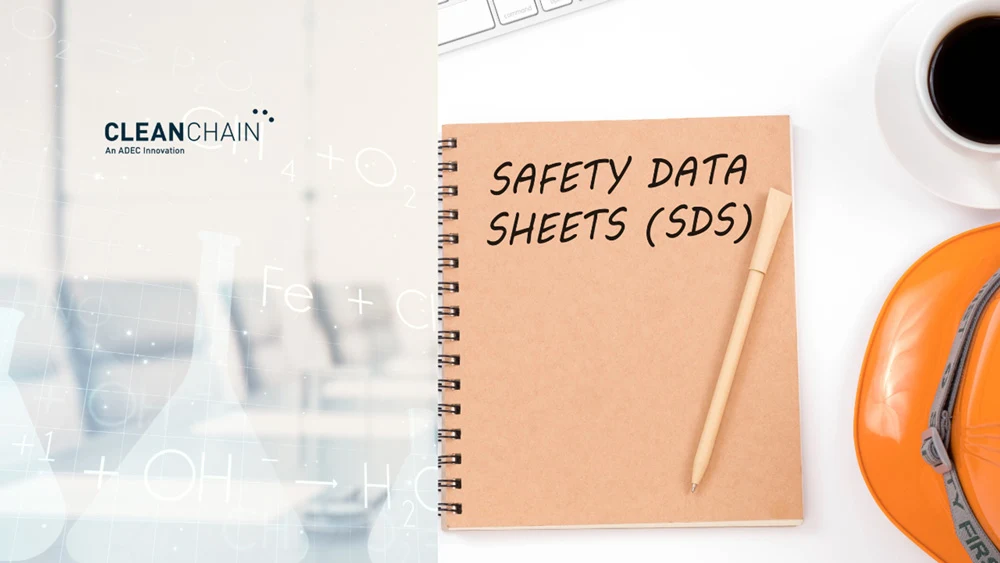
Manual Safety Data Sheet (SDS) management drains time, resources, and focus, all while increasing the risk of compliance failures.
With thousands of SDS documents scattered across suppliers, languages, and file types, most organisations struggle to maintain accurate, up-to-date chemical data.
In this article, we uncover the hidden inefficiencies of manual SDS processes and explore how automation, specifically CleanChain’s SDS Parser empowers organisations to regain control, ensure compliance, and make data truly actionable.
- The Complexity of SDS ManagementSafety Data Sheets are essential for chemical compliance, product safety, and environmental reporting. Yet, managing them manually remains a major pain point. SDS come in different languages, formats, and layouts. Important data like hazard statements, boiling points, or toxicological limits are often buried in text-heavy PDF files. Extracting, comparing, and reporting on that data manually can take hours per document.Now multiply that by hundreds or thousands of SDS across suppliers, and you begin to see the scale of the problem.
- Hidden Costs of Manual SDS Handling
- Time and Labour
Teams spend countless hours opening individual PDFs, searching for relevant sections, and copying data into spreadsheets. Even a small mistake can lead to compliance issues or reporting inaccuracies. - Inconsistency and Human Error
Different people extract data in different ways. Units of measure vary, hazard statements are interpreted inconsistently, and key details are often missed. These inconsistencies make it nearly impossible to maintain reliable, comparable data. - Outdated and Duplicate SDS
Many organisations store multiple SDS for the same product, often without knowing which one is current. This creates confusion, delays, and compliance gaps, particularly when audits or inspections occur. - Compliance and Reporting Delays
Without structured data, reporting becomes slow and reactive. Instead of analysing trends or identifying risks, compliance teams spend their time cleaning and re-entering data.
- Time and Labour
- The Case for AutomationManual processes might seem manageable at a small scale, but as supply chains grow and regulations tighten, automation becomes a necessity, not a luxury.CleanChain’s SDS Parser addresses these challenges head-on by automating the entire SDS management process. It reads SDS in PDF format, extracts all relevant information, and transforms it into structured, standardised data that can be used immediately.
- How CleanChain’s SDS Parser Solves the Problem
- Reads and Parses SDS AutomaticallyThe Parser scans PDF files and extracts every section of the SDS from hazard identification to toxicological data with precision and consistency.
- Handles Multiple LanguagesSDS from global suppliers often come in different languages. CleanChain’s tool captures both the original text and a translated English version, allowing brands to review and analyse data consistently.
- Converts Text into Structured DataInstead of storing values as unsearchable text (e.g., “Boiling point is <500 F”), the Parser extracts parameters, values, and units of measure. Data is standardised, for example, Fahrenheit is automatically converted to Celsius, so it can be used for calculations and reporting.
- Standardises Hazard InformationThe Parser converts vague hazard statements into standardised hazard codes (like H400), making data easier to track, compare, and report.
- Flags Outdated SDSIt identifies revision dates and flags out-of-date SDS automatically, ensuring compliance teams always work with current information.
- Consolidates Duplicate SDSIf multiple SDS exist for the same product (e.g., four versions of WD-40), the Parser assigns a single product ID and highlights the latest revision. This drastically reduces clutter and confusion.
- Real-World Benefits for CompaniesWith automation, you gain:
- Efficiency: SDS reviews that once took hours now take minutes.
- Accuracy: Standardised data means fewer errors and consistent reporting.
- Visibility: Structured data enables real-time dashboards and compliance tracking.
- Integration: Data can flow directly into existing systems via Excel, databases, or APIs.
- Scalability: Whether managing 100 SDS or 100,000, automation scales effortlessly.
- The Future of SDS ManagementAs ESG reporting and supply chain transparency become regulatory expectations, organisations can no longer rely on manual processes. Automated SDS parsing doesn’t just simplify compliance, it turns data into a strategic asset.With CleanChain’s SDS Parser, brands can transform unstructured documents into standardised, searchable, and actionable data, ready for compliance, safety, and sustainability reporting.
The hidden cost of manual SDS management isn’t just time, it’s lost insight, increased risk, and missed opportunities.
By automating SDS parsing, CleanChain helps organisations turn complexity into clarity, and compliance into confidence.
Ready to transform your SDS management? Book a demo